In case you have had a regular body check-up, a fast before lab tests for accurate results is often recommended. Nevertheless, at the urgent care center, the fasting requirement is not dependent on the usual lab tests but rather on the acute symptoms you show up with. Urgent care centers, for instance, focus on the swift determination of the causes of immediate health problems like infections or injuries, rather than carrying out the routine tests.
The article outlines the circumstances when fasting becomes necessary before conducting laboratory work in urgent care. In addition, this guide tells about certain tests for which you need to fast before lab tests, and how the preparation is different between routine and acute testing.
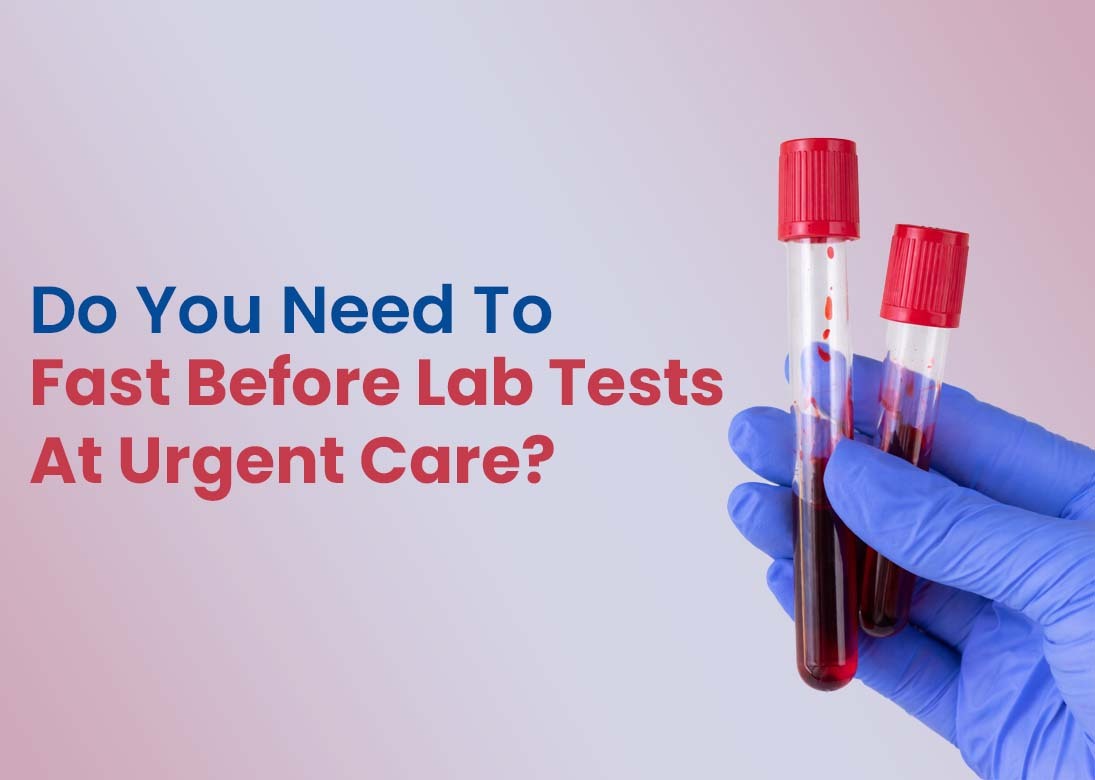
The Purpose of Fasting Before a Blood Test
Fasting is the practice of abstaining from anything edible but water for a set time, which is usually 8 to 12 hours, before the blood is drawn.
Reason Behind Fasting
The main reason behind this rule is that eating and drinking have an immediate effect on the blood’s composition, particularly on glucose and triglyceride (fats) levels.
- During meal times, blood glucose levels rise, while fats are also taken in, and thus, their levels in the blood increase.
- If, for example, blood sugar levels are to be measured for a diabetes diagnosis, the intake of food will result in a reading that is higher than the actual level, and thus the results will be of no use.
In such cases, the patient will be required to strictly follow the lab testing instructions.
When Urgent Care Demands You to Fast?
Although a large number of urgent care tests services are associated with infections (which do not require fasting). However, certain situations require a fast before lab test as an essential step:
Comprehensive Metabolic Panel (CMP) or Basic Metabolic Panel (BMP)
The panels, by nature, measure blood glucose levels.
- In case you are being assessed for diabetes, pre-diabetes, or are showing symptoms of extraordinarily high or low blood sugar, then the provider should know your glucose level.
- To get a proper glucose reading, one has to strictly follow fasting vs non-fasting guidelines.
Cholesterol Panel (Lipid Panel)
This process tests LDL, HDL, and triglyceride levels.
- The triglyceride count gets negatively impacted by the fatty food intake within the previous 12 hours, so a subject needs to be on a minimum 9- to 12-hour fast for the test.
- This is the most common reason for blood test fasting urgent care requirements.
Why Choose Urgent Care?
- Accessibility and Convenience: A primary healthcare doctor who might require an appointment is not like an urgent care center, which provides walk-in services with extended hours, making it really easy to get timely urgent care for sudden cough symptoms that may arise.
- Quick Diagnosis: Urgent care staff can instantly evaluate your symptoms. They have all the necessary equipment on-site, such as X-ray machines and rapid testing equipment, to evaluate and diagnose common respiratory diseases.
- Reasonable Cost: An urgent care visit is very low in cost as compared to an emergency room visit for the same reason of non-emergency symptoms.
Elective or Follow-Up Testing
If by any chance you are utilizing the walk-in lab services at urgent care specifically to get routine or follow-up screening, you should take notice of the things mentioned below:
- You must comply with the standard fasting protocol.
- For routine elective screening, proper urgent care test prep guarantees the data is comparable to previous results.
When Fasting Is Not Necessary at Urgent Care
Fasting is not necessary for most tests that are prescribed for urgent care visits due to acute symptoms. Patients who go to urgent care laboratories to get checked for an acute illness usually are not required to fast before the lab tests such as Complete Blood Count (CBC), Rapid Flu/Strep/COVID-19 Tests, TSH, or coagulation panels.
Crucial Fasting Exceptions: Medications and Hydration
Most people think that when they fast before lab tests, they cannot eat or drink anything at all.
- That is a widespread misconception, since two things are almost always allowed and sometimes even required.
- This includes water and prescribed medications.
- Knowing these exceptions will lead you towards a safe and successful urgent care test prep.
Water: The Necessary Exception
You are obliged to take in plain water even when fasting.
- Keeping up with your water intake during fasting will ensure that the blood volume is sufficiently high.
- Thus, the blood withdrawal by the phlebotomist at the walk-in lab will be easier.
Lack of water can lead to the collapse of veins, making it harder to get the blood sample, which will consequently delay the necessary blood test fasting for urgent care screening. So, drinking water while you are fasting is favourable.
Medications and Supplements
Consuming the medicines is of utmost importance among the lab test instructions.
- If your physician does not give any specific instructions, then you are to go on with taking all medications prescribed by your physician without any changes at all.
- If a certain medicine is only effective if taken with food, then consume it with a tiny sip of water and also keep the urgent care provider informed as soon as you arrive.
Do not fast before lab tests by omitting an important daily medication, since the danger becomes higher than the value of test. During the time of fasting, do not take non-essential vitamins or supplements.
Examining Acute Testing More Closely: Liver Function Tests (LFTs)
One of the most frequent reasons blood analysis is ordered by a walk-in lab doctor is to evaluate the condition of the liver. It is important due to the following reasons:
- It is helpful if you have jaundice, abdominal pain, or viral infection-like symptoms.
- Liver Function Tests, referred to as LFTs, are significant predictors of metabolic health.
The Reason LFTs Usually Do Not Need Fasting
The Liver Function Tests (LFTs), which include the measurement of enzymes ALT and AST, are ordered to identify the occurrence of acute damage or inflammation.
- Such enzymes are not greatly influenced by the intake of food.
- This is why if the urgent care physician diagnosis the sudden onset of a disease that has affected the liver, you will not be asked to fast before lab tests.
The need for diagnosis right away becomes more important than the slight variability in the test results that food may cause.
The Triglyceride Crossover
Nevertheless, the Liver Function Tests are very frequently included as part of a Lipid Panel.
- A fasting period is required for the Lipid Panel (due to triglycerides), your doctor might suggest that you follow the fasting vs non-fasting rules.
- It is best to check with the clinical team if you need to go through a complete urgent care test prep regimen.
Urgent Care Test Prep: Fasting vs. Non-Fasting Guidelines
Becoming aware of the precise laboratory test instructions before your arrival not only cuts down on wait time but also guarantees a result that can be used. When considering a non-urgent walk-in lab lipid or glucose check, schedule your fast appropriately.
The key element in deciding whether to comply with fasting vs non-fasting regulations is the nature of the test that has been prescribed.
Test Requiring Fasting |
Typical Fasting Period |
Allowed Consumption |
Why Fasting is Required |
|---|---|---|---|
|
Lipid Panel (Cholesterol & Triglycerides) |
9–12 Hours |
Water, prescribed |
All (unless directed otherwise) |
|
Fasting Glucose |
8–10 Hours |
Water, prescribed |
Food spikes blood glucose |
|
Basic Metabolic Panel (BMP) |
8–10 Hours |
Water, prescribed |
Measures glucose and kidney function markers |
|
Test Not Requiring Fasting |
None |
All (unless directed otherwise) |
Complete Blood Count (CBC), Strep Test, Flu Test, Liver Function Tests (usually) |
Safety must come first, always. In case you are taking a drug that needs to be taken with food, or if you are suffering from diabetes, please consult the clinical staff regarding your urgent care test preparation before you start any fast.
In The End
The acute nature of the illness is the major reason for a visit to urgent care and, hence, the need for a quick and correct diagnosis. No fasting rules are required for most tests done on infection. But in case your doctor orders metabolic panels or you have been screened as a preventive measure, you will have to follow the prescribed regimen. Therefore, always confirm with your doctor if a fast before lab tests is required, thus avoiding waste of both your time and health.
Why Choose Priority Urgent Care?
Priority Urgent Care stands out as an excellent option. Located conveniently in Houston, Texas, this walk-in clinic provides quick, affordable, and reliable care for non-life-threatening conditions. With extended hours, on-site lab testing, X-rays, and a friendly, patient-focused team, it ensures timely and comfortable treatment when you need it most.