
Can I Go to Urgent Care for a Yeast Infection?

Yes. Urgent care can evaluate symptoms of a vaginal yeast infection and recommend antifungal treatment when appropriate. Itching, irritation, burning, or unusual discharge may be caused by yeast, but bacterial vaginosis, sexually transmitted infections, and other conditions can cause similar symptoms. A medical assessment is especially helpful if this is your first episode, symptoms persist after treatment, or infections keep returning.
Priority Urgent Care in Clear Lake, Houston, TX, welcomes walk-in patients for suitable non-emergency concerns. Your provider can assess your symptoms and decide whether testing, medication, or additional follow-up is needed.
What Is a Yeast Infection?
A vaginal yeast infection, also called vulvovaginal candidiasis, develops when Candida yeast grows excessively. Candida can normally be present without causing symptoms. When overgrowth occurs, it may lead to:
- Vaginal or vulvar itching and irritation
- Redness, tenderness, or swelling around the vulva
- Thick, white discharge that may resemble cottage cheese
- Burning or discomfort during urination or sex
If you’re experiencing these symptoms, Priority Urgent Care can evaluate your condition and determine whether treatment is necessary. Our fungal infection care services in Clear Lake also address other fungal conditions, including ringworm, athlete’s foot, and skin infections.
Causes and Risk Factors
Yeast infections can occur without an obvious trigger. Factors associated with an increased risk include:
- Recent antibiotic treatment, which can change the normal vaginal bacteria
- Pregnancy and other hormonal changes
- Poorly controlled diabetes
- A weakened immune system or medications that suppress immunity
A yeast infection is not generally classified as a sexually transmitted infection. Having symptoms does not mean that a person has poor hygiene.
When Should You Go to Urgent Care for a Yeast Infection?
Our walk-in urgent care in Houston are fully equipped to diagnose and treat yeast infections quickly and effectively. Here’s when you should consider stopping by:
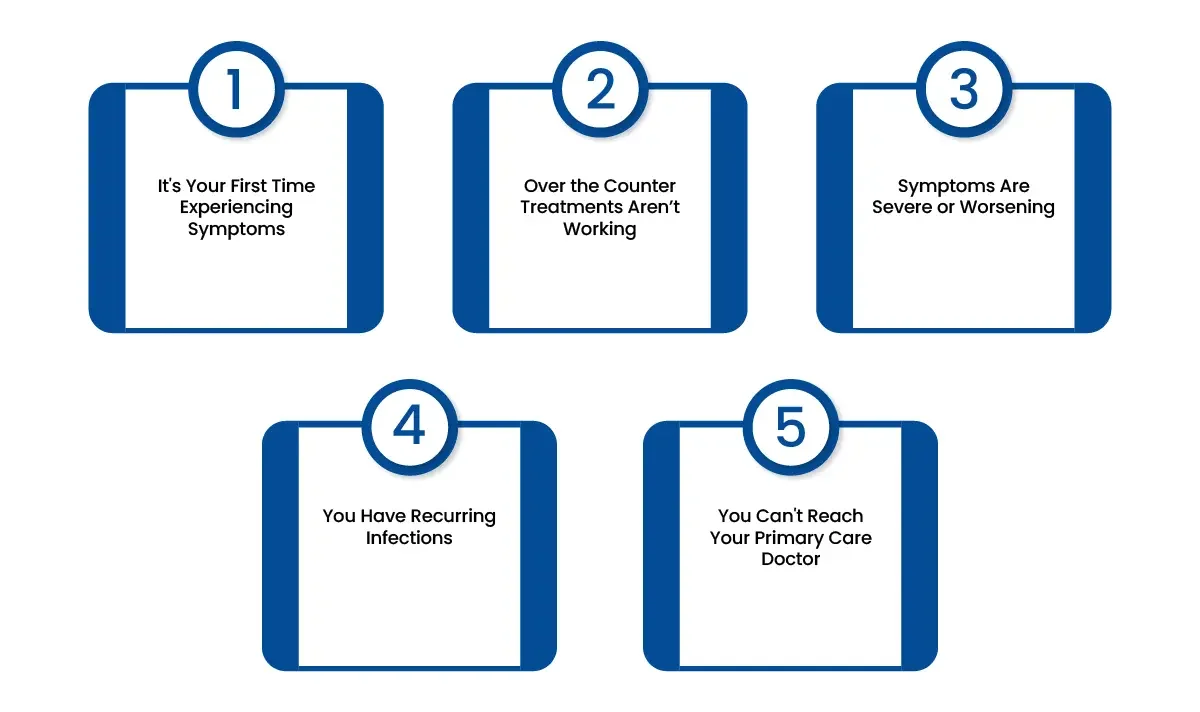
It’s Your First Time Experiencing Symptoms
A first episode is worth evaluating because yeast infections, bacterial vaginosis, irritation, and some sexually transmitted infections can feel similar. The correct treatment depends on identifying the cause.
Over-the-Counter Treatments Aren’t Working
If symptoms continue after completing an over-the-counter antifungal treatment, or return within two months, seek medical assessment. Repeating treatment without checking the diagnosis may delay care for another condition.
Symptoms Are Severe or Worsening
Significant swelling, painful cracks in the skin, or worsening irritation may need a different or longer treatment plan. Fever, significant pelvic or abdominal pain, or feeling seriously ill should not be assumed to be a simple yeast infection.
Infections Keep Coming Back
Three or more symptomatic yeast infections within a year may be considered recurrent vulvovaginal candidiasis. A clinician may recommend testing to confirm the cause and determine whether a longer treatment plan is needed.
You Are Pregnant or Have Certain Health Conditions
If you are pregnant, have diabetes, or have a weakened immune system, speak with a healthcare professional before choosing treatment. During pregnancy, CDC guidance recommends topical azole treatment for seven days and advises against oral fluconazole for vaginal yeast infections.
How Does Urgent Care Diagnose a Yeast Infection?
Your provider may ask about your symptoms, previous infections, medications, pregnancy status, and treatments already tried. An examination or a vaginal sample may be appropriate to look for yeast and distinguish it from other causes of irritation or discharge. Not every test is available on-site, and some samples may need outside laboratory processing.
Because urinary burning can also occur with a bladder infection, your provider may consider urinary tract infection evaluation when your symptoms suggest a UTI.
If symptoms or exposure history suggest a sexually transmitted infection, STD testing may be recommended rather than assuming the problem is yeast.
What Treatment Can Urgent Care Provide?
Treatment for an uncomplicated vaginal yeast infection often involves antifungal creams or suppositories, or an oral antifungal medicine such as fluconazole for eligible nonpregnant patients. The choice depends on your diagnosis, pregnancy status, medications, and health history. Severe or recurrent infections may need a longer course and sometimes additional testing.
Antibiotics do not treat yeast infections. Likewise, prescription-strength treatment is not automatically faster or more effective than the correct over-the-counter treatment for an uncomplicated infection. Follow the recommended course even if symptoms begin to improve.
How Can You Tell a Yeast Infection Is Healing?
Common signs of improvement include less itching and burning, reduced redness or swelling, and a gradual return toward usual discharge. Some people notice relief within a few days, but recovery time varies by infection severity and treatment. If symptoms are not improving after treatment, become worse, or return soon afterward, arrange an evaluation instead of repeatedly self-treating.
Can You Manage Mild Symptoms at Home?
If you have previously had a clinician-confirmed yeast infection and recognize the same mild symptoms, an appropriate over-the-counter vaginal antifungal may be an option. However, symptoms alone do not reliably distinguish yeast from other causes of vaginitis. Do not douche or use fragranced products inside the vagina, and avoid unproven home remedies as substitutes for effective antifungal medication.
Choose breathable underwear and avoid products that irritate the affected skin. Probiotic supplements and restrictive sugar diets have not been shown to reliably treat an active vaginal yeast infection. If you have diabetes, following your prescribed blood-glucose management plan may help reduce recurrence risk.
When Is Emergency Care Necessary?
An uncomplicated yeast infection usually does not require an emergency room. Seek urgent medical assessment for fever with pelvic pain, significant abdominal pain, or symptoms that do not fit a typical yeast infection. Go to the emergency department for severe or rapidly worsening illness, fainting, or other emergency symptoms. Pregnancy with significant pelvic pain or bleeding needs prompt medical attention.
FAQs About Yeast Infections
Visit Priority Urgent Care in Clear Lake, TX
Vaginal itching, burning, and unusual discharge deserve the correct diagnosis, particularly when symptoms are new, severe, or recurring. Priority Urgent Care at 2323 Clear Lake City Blvd, Suite 130, Houston, TX 77062, offers walk-in evaluations for appropriate non-emergency concerns.
Call (346) 483-0112 or use online check-in to ask about available testing and treatment options.