
Clear Lake’s Early Flu Season: When Flu or Respiratory Infections Require Urgent Care
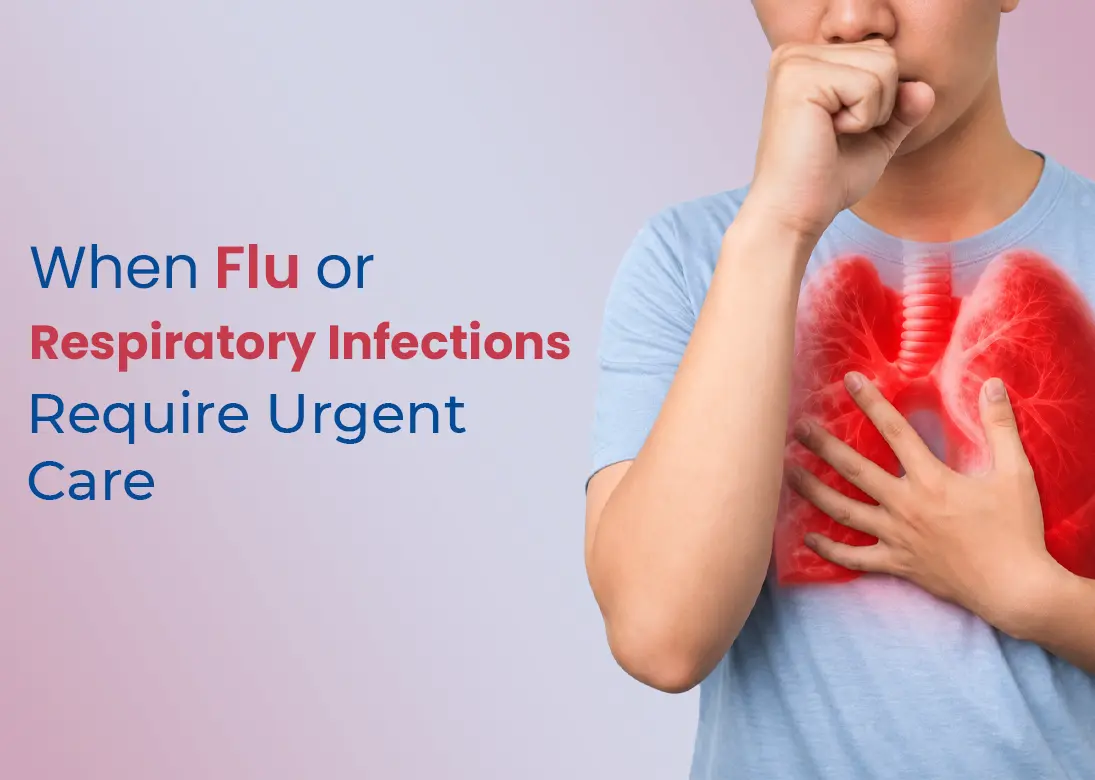
It started with a scratchy throat on a Tuesday in Clear Lake. By dinner, Charlotte had chills, a pounding headache, and aching muscles. She blamed a cold and went to bed early. The next morning, her fever hit 102°F, and she felt too weak to stand. Her story is common during Clear Lake’s early flu season this fall.
So when do flu symptoms need urgent care? Go if your fever stays above 102°F, you show signs of dehydration, or your cough gets worse. Children under five, adults over 65, and pregnant women should get checked sooner. Trouble breathing or chest pain needs the ER instead. Most mild cases can rest and recover at home.
Why Is Flu Season Starting Early in Clear Lake?
Flu activity in Texas usually peaks between December and February, but this year cases hit Webster and Nassau Bay weeks ahead of schedule. Packed Clear Creek ISD classrooms and early holiday travel give the influenza virus more chances to spread through respiratory droplets. Cold fronts push families indoors, where germs linger longer. Many people also delay flu vaccination until late fall, leaving gaps in protection. COVID-19 and RSV are circulating at the same time, so respiratory infections are adding up fast.
Common Flu and Respiratory Infection Symptoms
Flu symptoms 2026 tend to hit fast and hard. Most people feel fever and chills, body aches, headache, and deep fatigue within hours. A dry, persistent cough, sore throat, and nasal congestion often follow. These signs start as an upper respiratory infection (URI) but can move into the lungs. The flu incubation period runs one to four days after exposure, and fatigue and weakness can linger up to two weeks after the fever breaks.
Influenza A and Influenza B Symptoms
The difference between flu A and B comes down to how each virus spreads. The influenza A virus infects both people and animals, with subtypes like H1N1 and H3N2 driving most large outbreaks. The influenza B virus spreads only among humans. Many people ask: is influenza A or B worse? Influenza A tends to hit adults and seniors harder, while influenza B often affects children more severely. Both cause fever, cough, and muscle aches, so only a flu test can tell them apart.
| Feature | Influenza A | Influenza B |
| Who it infects | Humans and animals | Humans only |
| Common strains | H1N1, H3N2 | Victoria lineage |
| Outbreak size | Large, can cause pandemics | Smaller, local outbreaks |
| Groups hit hardest | Adults and seniors | Children and teens |
| Main symptoms | Fever, cough, body aches | Fever, cough, body aches |
Flu vs. Cold, COVID-19, and RSV Symptoms
Many viral respiratory infections share flu-like symptoms, making home guessing risky. A cold builds gradually and rarely causes a high fever. COVID-19, caused by SARS-CoV-2, may bring loss of taste or smell. Respiratory syncytial virus (RSV) often causes wheezing, especially in babies and older adults. One nasal swab test at urgent care can check for several of these viruses.
| Symptom | Flu | Cold | COVID-19 | RSV |
| Onset | Sudden | Gradual | Gradual or sudden | Gradual |
| Fever | Common, often high | Rare | Common | Sometimes, low |
| Body aches | Common, severe | Mild | Sometimes | Rare |
| Cough | Dry, persistent | Mild | Common | Common, with wheezing |
| Shortness of breath | With complications | Rare | Sometimes | Common in infants and seniors |
When Should You Visit Urgent Care for Flu Symptoms?
Urgent care is the right call when symptoms are too strong for home care but not life-threatening. A walk-in clinic can test, diagnose, and treat you in one visit. Going within 48 hours of your first symptom gives antiviral medications the best chance to work.
High Fever and Persistent Symptoms
A fever above 102°F that won’t drop with acetaminophen or ibuprofen needs a checkup. Any fever lasting more than three days, or one that breaks and comes back, can signal a secondary bacterial infection. A worsening sore throat or face pain may point to a sinus infection. See a provider if symptoms drag on past seven to 10 days.
Dehydration, Weakness, and Worsening Cough
Fever and sweating drain your fluids quickly. Signs of dehydration include dark urine, dry mouth, and dizziness. A cough producing thick yellow or green mucus may point to bronchitis or pneumonia. Chest tightness or wheezing with a cough needs a same-day exam so a provider can listen to your lungs and recommend the right treatment.
Flu Symptoms in Children, Seniors, and High-Risk Patients
Children under five, adults over 65, pregnant women, and people with asthma, COPD, or a weakened immune system face a higher risk of flu complications. These patients should visit urgent care as soon as symptoms appear, even if they feel mild. Early antiviral therapy can reduce the chance of a hospital stay. Parents should watch young kids for fussiness, poor feeding, or fewer wet diapers.
When Do Flu Symptoms Require Emergency Care Instead?
Some symptoms need an emergency room rather than urgent care. A pulse oximetry reading below 92% is a clear warning sign. Kids may show fast breathing or ribs pulling in with each breath. Go to the ER if you notice any of these:
- Trouble breathing or shortness of breath at rest
- Chest pain or pressure that won’t go away
- Bluish lips, face, or nail beds
- Confusion, seizures, or trouble waking up
- Not urinating for eight hours or more
- Symptoms that improve, then suddenly return worse
How Long Does the Flu Last, and How Long Is It Contagious?
How long does the A flu last? Most people recover from influenza A in five to seven days, though a lingering cough can stretch the full influenza recovery time to two weeks. Influenza B follows a similar timeline.
So how long is the flu contagious? Adults can spread the virus one day before symptoms start and up to seven days after. For influenza B, how long is it contagious? About the same window, though children and people with weak immune systems may shed the virus longer. The CDC advises staying home until you’re fever-free for 24 hours without medication.
How Is the Flu Diagnosed and Treated at Urgent Care?
Urgent care clinics diagnose and treat the flu in a single visit. A provider checks your temperature, throat, ears, and lungs and may clip a pulse oximeter to your finger to measure oxygen saturation. If the flu seems likely, a quick test follows.
Rapid Flu Testing and Diagnosis
A rapid influenza diagnostic test (RIDT) uses a nasal swab and delivers results in about 15 minutes. Molecular flu testing is more accurate and can catch cases an RIDT might miss. Some panels test for flu, COVID-19, and RSV from a single swab. Same-day flu testing works best during the first three to four days of illness.
Antiviral Medications and Supportive Care
Oseltamivir (Tamiflu) is the most common antiviral and works best within 48 hours of your first symptom. It can shorten illness by about a day and lower the risk of complications. High-risk patients may still benefit from antivirals after that window. Supportive care, including fluids, rest, and fever reducers, helps your body do the rest.
How to Manage Mild Flu Symptoms at Home
Most healthy adults can recover at home with rest and steady fluids. Skip work or school until you’re fever-free for 24 hours without medicine. Sip water, broth, or electrolyte drinks to stay ahead of dehydration. Acetaminophen or ibuprofen eases fever and body aches; avoid aspirin in children and teens. A cool-mist humidifier and warm tea with honey can calm a sore throat and nasal congestion. Check your temperature daily, and head to urgent care if symptoms worsen or stretch past a week.
How to Prevent the Flu and Respiratory Infections in Clear Lake
A yearly flu shot is the most effective flu prevention tool, and the CDC recommends it for everyone six months and older. Wash your hands for at least 20 seconds, especially before eating. Cover coughs and sneezes with your elbow to slow influenza transmission through respiratory droplets. Wipe down shared surfaces when someone at home is sick, and wear a mask in crowded indoor spaces if you live with a high-risk family member. Along with flu shots, we also offer COVID vaccines, so you can get both in one visit.
Get Flu Testing and Treatment at Priority Urgent Care in Clear Lake, TX
Priority Urgent Care offers same-day flu testing and walk-in flu treatment in Clear Lake, TX, no appointment needed. Our team runs a rapid flu test, checks your oxygen levels, and prescribes antiviral medications in one visit. We also test for COVID-19 and RSV when symptoms overlap. Walk in or visit priorityurgentcare.com to plan your visit today.
Frequently Asked Questions
Conclusion
Clear Lake’s early flu season means more families are getting sick sooner this year. Mild cases often improve at home with rest and fluids. A high fever, dehydration, or worsening cough calls for same-day urgent care. Trouble breathing or chest pain needs the ER. If you or your child feels sick, walk into Priority Urgent Care in Clear Lake, TX, for fast flu testing and treatment.