
Can Priority Urgent Care Treat Kidney Stones In Houston?

Yes. Urgent care can evaluate suspected kidney stones and help manage symptoms in selected, non-emergency cases. Priority Urgent Care offers kidney stone evaluations in Clear Lake to assess symptoms and determine whether testing, treatment, or further care is needed. However, confirming a stone often requires imaging that may not be available at urgent care, and larger or obstructing stones may need emergency treatment or a urologist.
Kidney stone pain can begin suddenly in your side or back and spread toward your groin. Knowing which symptoms can be evaluated at urgent care and which require the emergency room helps you get the appropriate care.
What Are Kidney Stones?
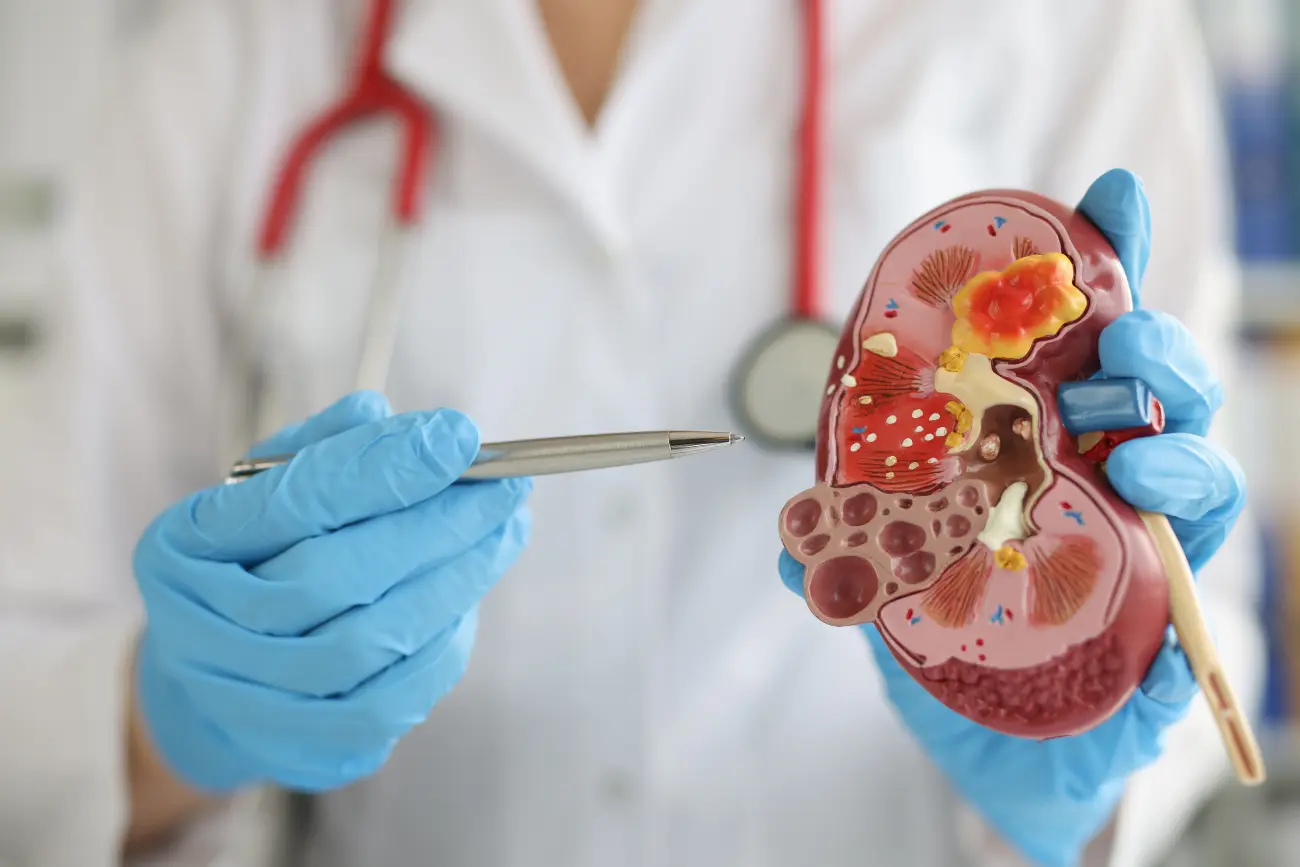
Kidney stones are hard deposits that form when certain minerals and substances become concentrated in urine. Small stones may pass without noticeable symptoms, while stones moving into the ureter can cause intense, wave-like pain, blood in the urine, nausea, or urinary discomfort.
Types of Kidney Stones
- Calcium stones: The most common type; often made of calcium oxalate and sometimes calcium phosphate.
- Uric acid stones: Can form when urine is persistently acidic and may be associated with gout or other metabolic factors.
- Struvite stones: Often associated with certain urinary tract infections and may grow quickly.
- Cystine stones: Develop in people with cystinuria, an uncommon inherited condition.
Causes and Risk Factors of Kidney Stones
Not drinking enough fluids can increase the concentration of stone-forming substances in urine. Other factors include a family or personal history of stones, high dietary sodium intake, certain medical conditions, and some medicines. Stone risks and prevention advice depend on the stone type.
What Symptoms Can Urgent Care Evaluate?
- Pain in the side, lower back, or abdomen that comes and goes
- Pain that travels toward the groin
- Blood in the urine or urinary discomfort
- Nausea that does not prevent you from drinking fluids
- A history of kidney stones with familiar but manageable symptoms
Kidney stones are not the only cause of flank or urinary pain. A urinary infection, muscle strain, or another abdominal condition can cause similar symptoms. Burning urination, urgency, or fever can also occur with a urinary infection. See more about urinary tract infection service when the symptoms overlap.
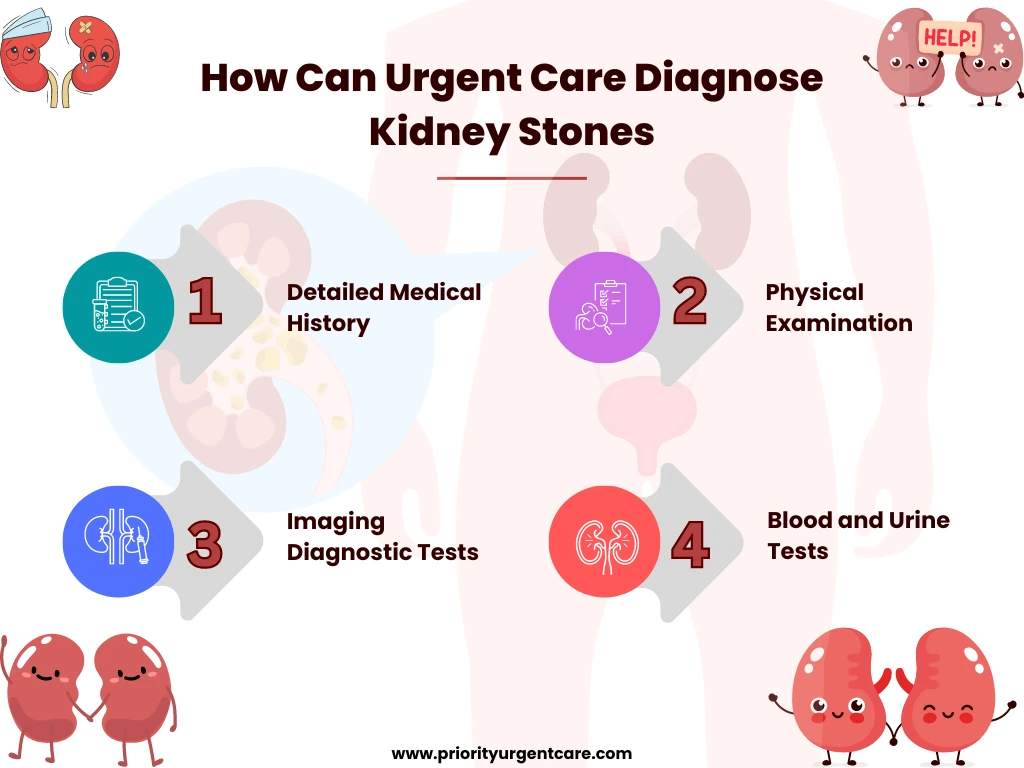
How Can Urgent Care Evaluate Possible Kidney Stones?
Medical History and Examination
The provider asks where the pain began, whether it moves, how severe it is, and whether you have fever, vomiting, urinary symptoms, prior stones, or other medical conditions. An examination and vital signs help identify warning signs.
Urine and Other Laboratory Tests
A urine test can detect blood or signs of a urinary infection, but neither a normal nor an abnormal urine test can confirm a kidney stone on its own. Additional laboratory tests may be appropriate depending on the findings. Priority Urgent Care offers selected in-house laboratory tests that may support the assessment, depending on the clinical concern.
Imaging When Needed
Imaging may be necessary to confirm a kidney stone, determine its size and location, or check for a urinary blockage. The National Institute of Diabetes and Digestive and Kidney Diseases’ kidney stone diagnosis guidance explains that CT scans can identify a stone’s location and size, while ultrasound and X-rays may also be used depending on the patient’s circumstances. A routine abdominal X-ray can miss some stones, so it cannot reliably rule out kidney stones. Priority Urgent Care can recommend additional imaging or referral when medically indicated.
What Treatment Can Urgent Care Provide?
For a stable patient without warning signs, a provider may recommend appropriate pain relief, oral hydration guidance, symptom monitoring, and referral for further imaging or urologic follow-up. In selected cases, a prescription medicine may help a ureteral stone pass; the decision depends on the suspected stone and the patient’s health. Antibiotics are appropriate for a bacterial infection, not for an uncomplicated kidney stone.
Can Urgent Care Remove Kidney Stones?
No. Routine urgent care clinics do not perform surgical stone-removal procedures. When a stone is too large to pass, causes obstruction, or continues to cause problems, a urologist may recommend a specialized procedure:
- Shock wave lithotripsy (SWL): Shock waves fragment certain stones so pieces may pass more easily.
- Ureteroscopy: A specialist uses a small scope to reach and treat a stone in the urinary tract.
- Percutaneous nephrolithotomy (PCNL): A hospital-based procedure typically used for selected large or complex kidney stones.
These are specialist treatments, not procedures performed at Priority Urgent Care. Treatment decisions depend on stone size, position, symptoms, infection risk, and other findings.
When to Go to the Emergency Room for Kidney Stone Symptoms
Seek emergency medical assessment for suspected kidney stones accompanied by:
- Fever or chills, particularly with flank pain (possible infected obstruction)
- Severe or uncontrolled pain
- Inability to urinate or markedly reduced urine output
- Repeated vomiting, inability to keep fluids down, or signs of significant dehydration
- Fainting, confusion, or rapidly worsening illness
A blocked urinary tract with infection can be a medical emergency. Do not wait for an urgent care appointment if these symptoms occur. Pregnant patients, people with a single functioning kidney, and those with significant kidney disease should seek prompt medical advice for suspected stones.
How Can You Reduce the Risk of Future Kidney Stones?
Prevention depends on the kind of stone. For many people, drinking enough fluids to avoid concentrated urine, reducing excessive sodium intake, and discussing a personalized eating plan with a clinician are helpful first steps. Avoid eliminating dietary calcium without medical advice. People with recurrent stones may benefit from stone analysis and specialized urine testing.
Frequently Asked Questions
Kidney Stone Evaluation in Clear Lake, Houston, TX
Priority Urgent Care evaluates selected non-emergency kidney stone symptoms at 2323 Clear Lake City Blvd, Suite 130, Houston, TX 77062. Our medical team can assess your symptoms, discuss testing and symptom management, and explain whether emergency or urology care is needed.
Call (346) 483-0112 or use online check-in before visiting. For fever with flank pain, uncontrolled pain, urinary blockage, or other emergency warning signs, go directly to an emergency department.