
Can I Go to Urgent Care for Back Pain?

Yes. Urgent care can evaluate many cases of non-emergency back pain, including muscle strains, spasms, and discomfort after minor activity-related injuries. A provider can examine your back, assess movement and nerve symptoms, and recommend treatment or follow-up. However, new bladder or bowel problems, numbness around the groin, significant leg weakness, or severe pain after major trauma require emergency care.
If your back pain is disrupting work, sleep, or everyday movement, the important question is whether it needs a routine appointment, urgent evaluation, or an emergency department. Priority Urgent Care provides back and neck pain evaluations in Clear Lake for suitable non-emergency conditions, including muscle strains, spasms, and pain after minor injuries.
When Should You Go to Urgent Care for Back Pain?
Consider urgent care when pain is uncomfortable or limiting activities but you do not have emergency warning signs. Common reasons include:
- A sudden lower-back strain after lifting, bending, or exercising.
- Muscle spasms, stiffness, or difficulty moving comfortably.
- Localized back pain after a minor injury without significant trauma.
- Pain that is getting worse or not responding to reasonable home care.
- New pain that needs assessment before returning to work or physical activity.
Back pain that persists for several weeks, repeatedly returns, or affects daily activities may also need ongoing evaluation through primary care or a musculoskeletal specialist. Urgent care can assess a new flare-up, but may not replace long-term care.
When Back Pain Requires Emergency Care
Certain symptoms can signal pressure on spinal nerves, a serious injury, or another dangerous condition. Go to an emergency department immediately for:
- New difficulty starting urination, loss of bladder or bowel control, or loss of sensation around the genitals or anus.
- Severe or worsening weakness or numbness in both legs.
- Severe back pain following a major fall, car crash, or other significant trauma.
- Back pain with rapidly worsening symptoms, severe illness, or signs of a serious infection.
Back pain with fever or chills warrants prompt same-day medical assessment. The level of care depends on symptom severity and risk factors. Unexplained weight loss, night pain, or a history of cancer also requires medical evaluation, though these findings do not automatically mean an ER visit.
Pain that travels down one leg may be sciatica and does not by itself always require emergency care. New progressive weakness or the bladder, bowel, or saddle-area symptoms above change that decision.
Common Causes of Back Pain
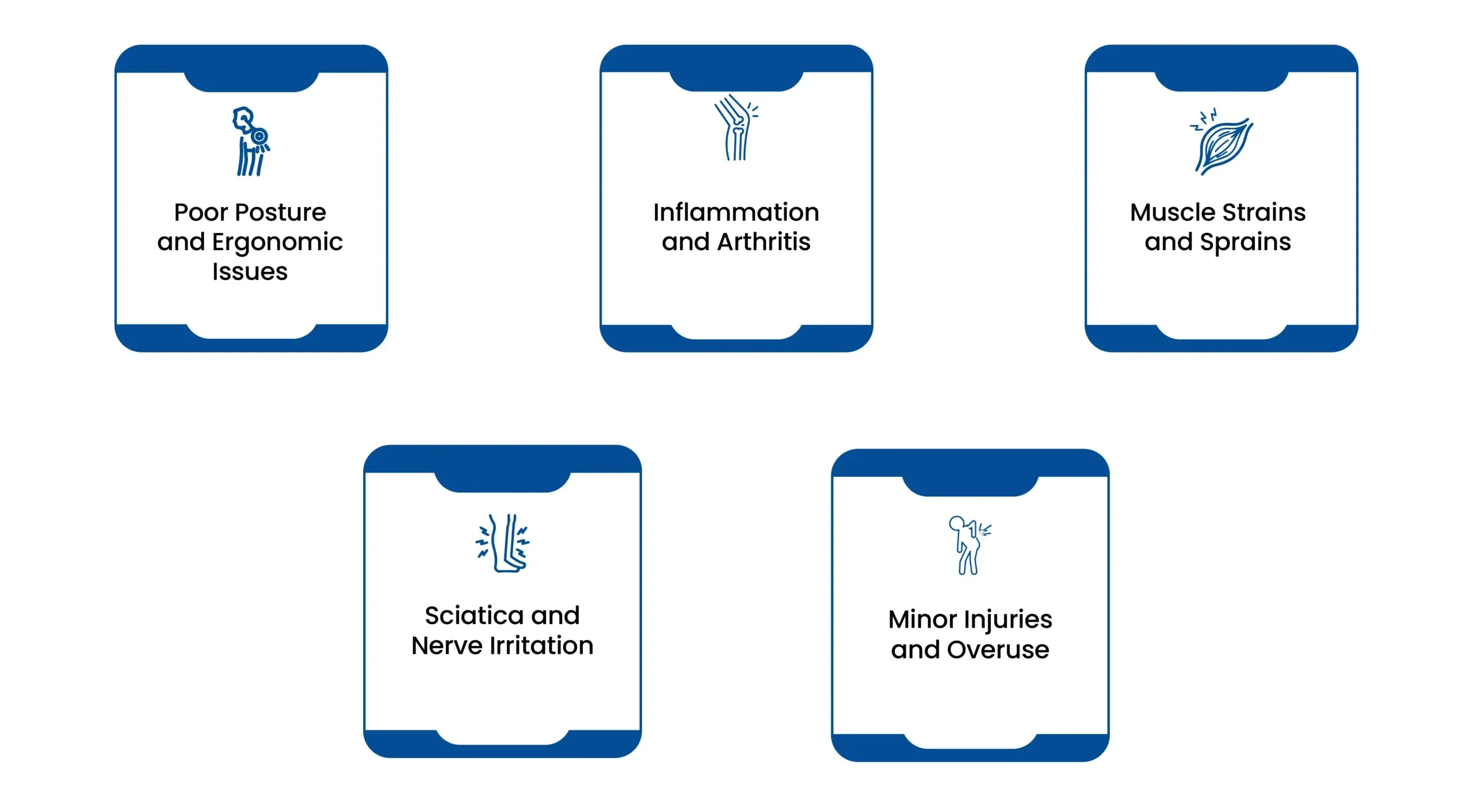
Muscle Strains and Sprains
Heavy lifting, twisting, or an unusual workout may strain back muscles or ligaments. Pain often becomes more noticeable with certain movements and can be accompanied by stiffness or spasms.
Prolonged Sitting and Repetitive Activity
Long periods at a desk, repetitive bending, and physically demanding tasks may aggravate back pain. Symptoms can also be affected by strength, conditioning, and how work activities are performed.
Sciatica and Nerve Irritation
Sciatica typically causes pain that radiates from the lower back into the buttock or leg. Some people also notice tingling or numbness. A provider can evaluate nerve-related symptoms and determine whether follow-up or advanced testing is necessary.
Arthritis and Other Ongoing Conditions
Age-related spinal changes, arthritis, and other chronic conditions can contribute to recurring pain. An urgent care visit may help assess a flare-up, while a regular clinician can coordinate ongoing treatment.
Kidney or Urinary Problems
Not all pain near the lower back starts in the spine. Pain more toward one side or the flank, especially with painful urination, fever, blood in the urine, or nausea, may have a urinary cause. These symptoms warrant prompt assessment. Learn how kidney pain may differ from a muscle strain.
What Will Urgent Care Do for Back Pain?
1. Review Your Symptoms and Medical History
The provider asks how and when the pain began, whether it follows an injury, what makes it better or worse, and whether you have leg symptoms, fever, or changes in bladder or bowel function.
2. Perform a Physical Examination
The examination may assess tenderness, range of motion, walking, strength, sensation, and reflexes. These findings help identify signs of muscle strain, nerve irritation, or a condition requiring referral.
3. Decide Whether Imaging Is Needed
Most new, uncomplicated lower-back pain does not require an immediate X-ray, CT scan, or MRI. The American College of Radiology’s low back pain imaging guidelines recommend against routine initial imaging when there are no concerning symptoms or examination findings. Imaging may be needed following significant trauma, when a serious condition is suspected, or when symptoms persist despite appropriate treatment. Priority Urgent Care offers on-site X-ray services when medically appropriate, but an X-ray does not reliably show disc injuries or nerve compression.
4. Discuss Treatment and Follow-Up
Depending on the findings and your health history, a provider may recommend activity changes, heat or cold, suitable pain medication, home exercises, or follow-up with primary care or physical therapy. Some patients need specialist assessment rather than routine urgent care treatment.
How to Relieve Mild Back Pain at Home
If your pain is mild and you have no warning signs, these measures may help:
- Stay gently active. Short walks and comfortable movement are generally better than prolonged bed rest.
- Use heat for tight muscles or a wrapped cold pack if an acute injury feels swollen or sore.
- Avoid heavy lifting and movements that sharply increase pain until symptoms settle.
- Ask a clinician or pharmacist whether an over-the-counter pain reliever is safe for you, especially if you have kidney disease, stomach ulcers, take blood thinners, or could be pregnant.
- Return gradually to normal activity; stop exercises that cause worsening pain or new neurological symptoms.
Seek evaluation if pain is getting worse, interfering with daily activities, or not improving over the following weeks. Do not try to manage emergency warning signs at home.
Why Visit Priority Urgent Care for Back Pain?
Priority Urgent Care in Clear Lake, Houston, evaluates non-emergency back and musculoskeletal complaints. The clinic welcomes walk-in patients, provides an examination and treatment recommendations, and can arrange appropriate follow-up. If an injury suggests a fracture, the team may recommend imaging or refer you for additional care. For activity-related injuries involving muscles or joints, you can also read about sports injury services.
Frequently Asked Questions
Get a Back Pain Evaluation in Clear Lake, TX
Back pain after lifting, muscle spasms, and other non-emergency complaints can often be evaluated at urgent care. Priority Urgent Care serves patients at 2323 Clear Lake City Blvd, Suite 130, Houston, TX 77062. Walk-ins are welcome, and online check-in is available. Call (346) 483-0112 or check in online before visiting. If you have emergency warning signs, go to an emergency department instead.